
In Wilson and across Eastern NC, homeowners do not have to live on the coast to face serious flood risk. Storms like Hurricane Floyd in 1999 and Hurricanes Matthew and Florence in the last decade showed how quickly inland communities can end up under water when the rain does not have anywhere to go. Many crawl spaces that stayed dry for years took on water in a single weekend.
We have seen that reality firsthand since 1976, helping families around Wilson, NC protect their homes from flooding and moisture problems. With more than 40 years of plumbing experience, we know how much difference a well-maintained sump pump can make when a hurricane spins up off the Atlantic. Getting your system ready before the season starts is one of the most practical steps you can take to protect your home and your peace of mind.
Why Eastern NC Homes Face Higher Flood Risk Than Most Homeowners Expect
Wilson sits in North Carolina’s coastal plain region, which is relatively flat with very little topography. Instead of water draining quickly down hills or into deep valleys, stormwater here tends to spread out and pool across neighborhoods. When a slow-moving tropical system stalls over Eastern NC, that flat landscape lets floodwater creep into places that do not typically see standing water.
Research from UNC-Chapel Hill found that more than 90,000 buildings in Eastern North Carolina flooded at least once between 1996 and 2020, and 43% of those buildings were outside the mapped FEMA floodplain. In other words, almost half of the structures that flooded were in areas many people assumed were safe. Relying on a flood map alone can create a false sense of security.
On top of that, coastal plain water tables in Wilson-area counties can sit as close as 2 to 6 feet below the surface. When heavy rain falls for hours, that shallow water table quickly pushes moisture up toward foundations and crawl spaces. Combined with Wilson’s clay soils and humid summers, that creates conditions where crawl space moisture problems are common even in homes that have never seen standing water above ground.
How a Sump Pump Protects Your Crawl Space
In most Eastern NC homes, the lowest point is not a basement, it is the crawl space. A sump pump system is designed to capture groundwater that migrates through the soil toward that low point and move it away from your foundation before it can collect under the house.
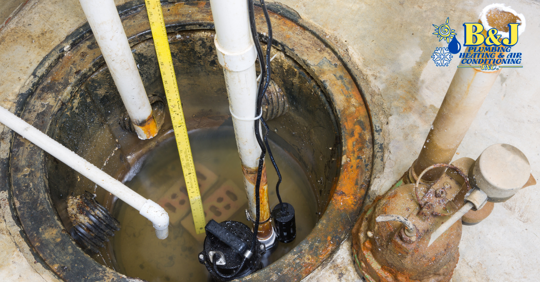
Water flows into a sump pit, typically located at the lowest corner of the crawl space. When the water in the pit rises, a float switch lifts and signals the pump to start. The pump then moves water through a discharge line that routes it outside and away from the foundation.
For the system to work properly, discharge line placement matters. The pipe should terminate at least 20 feet away from the foundation. If the outlet is too close, the discharged water can soak right back into the soil, return to the pit, and keep the pump running in a constant loop. That recirculation wears out the motor and still leaves the crawl space at risk.
Most sump pumps have an average lifespan of about 7 to 10 years. Because they often sit idle during dry stretches, failures tend to go unnoticed until the next tropical system arrives. That is why pre-season sump pump maintenance in Eastern NC is so important: you want to find weak spots on a sunny day, not in the middle of a hurricane.
Pre-Season Maintenance Steps to Complete Before Hurricane Season
The Atlantic hurricane season runs from June 1 through November 30, with the most intense activity typically from mid-August through late October. We encourage homeowners in Wilson, NC to work through a simple checklist well before that peak period.
1. Test the Pump With a Bucket of Water
The simplest way to confirm basic operation is a controlled test.
- Slowly pour water into the sump pit. Use a bucket and add water gradually so you can watch the sequence.
- Watch the float switch. As water rises, the float should lift smoothly without sticking or jerking.
- Confirm the motor starts quickly. As the float reaches its trigger point, the pump should switch on within seconds.
- Check that water discharges outside. You should see or hear water exiting at the end of the discharge line and watch the pit water level drop.
If the float does not rise, the motor hums without pumping, or the pit fills without emptying, the pump needs attention before you can rely on it in a storm.
2. Perform Basic Sump Pit Cleaning
Over time, silt, small stones, and other debris settle in the bottom of the pit. That buildup can clog the pump intake or jam the impeller, the internal fan that moves water through the pump.
- Turn off power to the pump. Unplug it from the GFCI outlet or switch off the dedicated breaker before you start.
- Remove loose debris. Scoop out any visible gravel, mud, or trash from the bottom and sides of the pit.
- Inspect the impeller area if accessible. If your pump design allows, check for leaves, plastic, or sludge near the intake.
Regular sump pit cleaning reduces the risk of clogs that tend to show up right when you need the pump the most.
3. Check the Check Valve for Short-Cycling
The check valve on the discharge line keeps pumped water from flowing back into the pit when the motor shuts off. When it fails, water drains back into the basin, the float switch rises again, and the pump starts over and over. That pump short-cycling can burn out the motor long before its expected lifespan.
- Listen during your bucket test. The pump should run in steady, complete cycles, not start and stop rapidly.
- Watch the discharge line. After the pump stops, the water level in the pit should stay down, not creep back up immediately without new inflow.
If the pump seems to run constantly or in very short bursts, the check valve may need repair or replacement.
4. Confirm Discharge Line Placement & Condition
The discharge line is your sump pump’s exit route. Any blockage or poor routing undercuts the system.
- Verify the outlet distance. The discharge point should be at least 20 feet from the foundation, with water flowing away from the house.
- Check for obstructions. Look for grass, mulch, mud, or ice (in colder months) blocking the outlet.
- Inspect above-ground sections. Make sure pipes are intact, supported, and free from cracks or disconnected joints.
In flat, coastal plain yards like those around Wilson, it can help to route the outlet to a swale, drainage ditch, or lower part of the property where water can disperse.
5. Verify Safe, Reliable Power at the GFCI Outlet
Most sump pumps plug into a dedicated GFCI outlet for electrical safety. A ground-fault circuit interrupter, or GFCI, shuts off power quickly if it detects a problem. That is important in damp locations but can quietly stop a pump if the outlet trips.
- Test the GFCI. Press the “test” button to confirm it trips, then press “reset” so the pump has power again.
- Avoid extension cords. They are more likely to come loose, overload, or sit in standing water.
- Consider a dedicated circuit. In some homes, a dedicated circuit helps keep the pump from sharing power with other major loads.
If you find yourself resetting the GFCI frequently, it is a sign that the outlet, wiring, or pump may need professional evaluation.
The Power Outage Problem: Why Battery Backup Matters in Hurricane Country
Standard sump pumps run on household electricity, so they stop the moment the power goes out. Unfortunately, the same hurricanes and tropical storms that saturate our soils in Eastern NC often bring tree damage and prolonged outages. That timing creates a real vulnerability: your pump is working hardest right when it is most likely to lose power.
A battery backup sump pump is a secondary unit, usually installed alongside the primary pump, that runs on a dedicated battery when grid power fails. When the main pump loses power or cannot keep up, the backup system senses rising water and turns itself on automatically.
To keep a backup system reliable, you need to maintain the battery just like you would for a vehicle or generator.
- Test the battery every few months. Many systems include a test button; pressing it confirms the backup pump and battery still respond.
- Track battery age. Most manufacturers recommend replacement every 2 to 3 years, depending on usage and type.
- Keep terminals clean and connections tight. Corrosion on the battery lugs can interrupt power even if the battery itself is healthy.
Homes without any form of backup power are most exposed during the peak of Atlantic hurricane season, from mid-August through late October, when the combination of historic storms and saturated ground is most likely. For many Wilson-area homeowners, adding or upgrading a battery backup sump pump is one of the best ways to strengthen crawl space moisture management before the next major storm.
Warning Signs Your Sump Pump May Already Be Failing
Because sump pumps often sit idle for months between storm events, problems can develop slowly and only show up under stress. Paying attention to early warning signs gives you time to act before floodwater is at the door.
- Continuous running in dry weather. If the pump runs frequently even when it has not rained, a stuck float switch or a failed check valve may be forcing it to cycle unnecessarily.
- Unusual noises. Grinding, rattling, or loud humming from the sump pit can indicate a struggling motor, worn bearings, or a clogged impeller.
- Visible rust or corrosion. Rust on the pump housing or discharge pipe may signal long-term moisture exposure and internal deterioration.
- Musty odors or water staining. Damp smells, mold growth, or tide lines on crawl space piers or walls show that water has already been present, even if the pump seems to run when you look at it.
If you notice any of these signs, it is wise to treat them as early warnings rather than waiting for the next named storm to test the system for you.
When to Call a Plumber Instead of Handling It Yourself
There is a lot a homeowner can do with basic sump pump maintenance, but some situations call for a licensed plumber’s training and tools. Homes in high-water-table areas like Wilson’s coastal plain, older pumps, and chronic issues are all reasons to bring in a professional.
We recommend calling a plumber if any of the following apply:
- Your pump is 7 to 10 years old or older. At that age, inspection or replacement is often more practical than repeated minor fixes.
- The pump runs constantly during storms. That can be a sign the pump is undersized for your property’s water volume or that the drainage design needs adjustment.
- You see repeated flooding or standing water. Recurring problems often point to design issues, not just maintenance gaps.
- You are uncomfortable working around electricity and confined crawl spaces. Safety is a real concern in tight, damp areas under the house.
A licensed plumber can evaluate whether your current sump pump is appropriately sized, check the float switch and check valve, look for discharge line problems, and recommend upgrades like battery backup where they make sense. At B & J Plumbing, Heating, Air Conditioning & Electrical, we have been serving Wilson-area families since 1976 with background-checked, drug-tested, NATE-certified technicians and comprehensive parts and labor warranties on our work.
Get Ahead of Hurricane Season While the Skies Are Clear
In Eastern NC, the difference between a dry crawl space and a flooded one often comes down to work done weeks or months before a storm arrives. Testing your sump pump, cleaning the pit, checking the check valve, and confirming reliable power and discharge line placement are all practical steps that fit into a single afternoon. Adding or maintaining a battery backup sump pump gives your home another layer of protection when the power goes out and the rain keeps falling.
If you would like a professional set of eyes on your system before hurricane season reaches its peak, our team at B & J Plumbing, Heating, Air Conditioning & Electrical is ready to help you review your options and get your sump pump in dependable shape. You can reach us at (252) 512-5651 to schedule a visit that fits your schedule.